Locative phrases
This section focusses on locative phrases in Setswana such as a locative noun phrase (LOCNP) and a locative class noun phrase (LOCCLNP). The head in a LOCNP is a locative noun (belonging to noun classes 1 to 15). The head in a LOCCLNP is a locative class noun (belonging to noun classes 16 to 20).
- Locative nouns and locative noun phrases
- The internal structure of the locative noun phrase
- Syntactic and semantic function of the locative noun phrase
- Syntactic uses of locative noun phrases
- Locative class nouns and locative class noun phrases
- The internal structure of the locative class noun phrase
- Syntactic and semantic functions of the locative class noun phrase
- Syntactic uses of locative noun phrases
- References
Locative nouns and locative noun phrases
The structuring of a locative noun phrase (LOCNP) involves two aspects i.e., its internal and external syntax. The focus of the internal syntax is on how a LOCNP is constructed in a well-formed manner whereas the use of a LOCNP in larger constructions is the focus of its external syntax. The LOCNP can be used in another phrase such as the locative particle phrase (LOCPARTP) as the complement of the locative particles mô, fa, and kwa or it can be used in a sentence as an oblique or an adjunct. Take note that the use of the locative particle kô as alternative to kwa is common in Setswana dialects (Cole, 1955: 341).
In this topic a characterisation of locative nouns, the phrase-internal structure of the LOCNP, its syntactic uses and semantic functions, modification and the syntactic functions of the LOCNP are presented. The description of the phrase-internal structure of the LOCNP concentrates on the structuring of this phrase with words as well as with word groups and the agreement phenomena that govern the syntactic structure.
Characterisation
A short characterisation of the locative noun is first presented as it functions as the head in a LOCNP. Setswana nouns are divided into noun classes and these noun classes are divided into the non-infinitive noun classes (noun classes 1 to 14), the infinitive noun class (noun class 15), and the locative class nouns (noun class 16-20) (Krüger, 2006: 57-98).
Nouns belonging to noun classes 1 to 14 are referred to as ordinary nouns and locative nouns can be formed from these nouns as they can be inflected with a locative suffix (1). Infinitive nouns belonging to noun class 15 also have valence for a locative suffix (15). Krüger (2006: 91) states that the “locative suffix -(i)ng adds to the inherent meaning of the noun a semantic value which signifies”
- the physical or abstract locality where, or
- the time when an action takes place, or
- the state (condition) in which an object finds itself”.
| letsatsi > letsatsing |
| le- tsatsi > le- tsatsi-ing |
| NPre5-sun > NPre5-sun- LocSuf |
| sun day > in the sun, during the day |
| go dumisa > go dumiseng |
| go- dumis- a > go- dumis- a- ing |
| NPre15-pronounce-VEnd > NPre15-pronounce-VEnd-LocSuf |
| the pronouncing > in the pronouncing/pronunciation |
The morphological structure of nouns that include a locative suffix is described in the Morphology section (cf. Cole, 1955: 342-344; Krüger, 2006: 73-92).
Locative nouns belonging to noun classes 1 to 15 are included in the syntactic structure of the LOCCLNP as they function as the head in this phrase. The nouns in noun classes 16 to 20 denotes the locative class nouns and their inclusion in syntactic structures will be discussed in the following section of this topic.
The internal structure of the locative noun phrase
A LOCNP can be constructed with a word or a word group. In this instance the word is a locative noun and the word group is a locative noun group.
The locative noun phrase constructed with only a locative noun
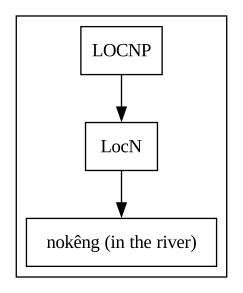
The LOCNP can consist of only a head as it does not need an obligatory complement or a possible modifier to form a grammatical structure. The head is a locative noun belonging to noun classes 1 to 15. A locative noun in these noun classes can be used to construct the minimal structure of a LOCNP as this phrase can only consist of a head. In (3) the head in the LOCNP consists of the locative noun nokêng ‘in the river’. This phrase constitutes a minimal phrase structure.
| Re tla šapa nokêng. |
| re- tla- šap- a (ne-)-noka- ing |
| AgrSubjP1pl-FutPre-swim-VEnd NPre9-river-LocSuf |
| we shall swim in the river. |
The phrase structure rule for the LOCNP nokêng ‘in the river’ in (3) is:
- LOCNP → LocN
The following tree diagram represents the constituent structure of the LOCNP in (3).
The locative noun phrase constructed with a locative noun group
The LOCNP can also be constructed with a locative noun group. The locative noun group consists of a head noun followed by one or more than one modifier (qualifier). The assumption is that the modifiers of a locative noun are the same words and word groups that can modify a noun (cf. Berg, 2018: 105-107).
To follow an exposition of the possible modifiers of a locative noun is presented and the word order followed and the agreement phenomena that govern the structure of a LOCNP are also included in this exposition.
Locative noun modified with a pronoun
The head locative noun in a LOCNP may be modified with specific pronouns. The locative noun and the succeeding pronoun must agree regarding class or person and number to form a valid syntactic structure. A pronoun is part of a pronoun phrase (PROP) and the PROP in this instance functions as a modifier of the locative noun in a LOCNP. The phrase structure rule that can be derived in this instance is:
- LOCNP → LocN PROP.
The abovementioned rule also illustrates the word order followed in this phrase.
Examples (4) to (10), the applicable phrase structure rules and the tree diagrams illustrate the inclusion of the specific pronouns in a LOCNP.
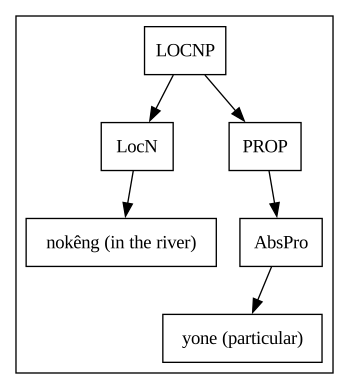
The locative noun in (4) is modified with an absolute pronoun.
| nokêng yone |
| (ne-) noka- ing yone |
| NPre9-river-LocSuf AbsPro9 |
| in the particular river |
Two phrase structure rules are applicable to the LOCNP presented in (4):
- LOCNP → LocN PROP
- PROP → AbsPro
The following tree diagram represents the constituent structure of the LOCNP in (4).
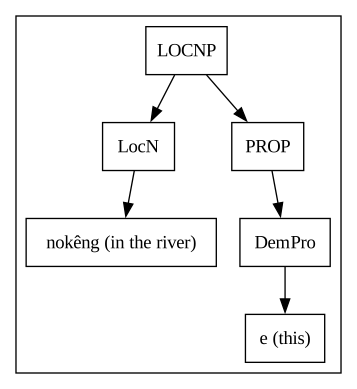
The locative noun in (5) is modified with a demonstrative pronoun.
| nokêng e |
| (ne-)-noka- ing e |
| NPre9-river-LocSuf DemPro9D1 |
| in this river |
Two phrase structure rules are applicable to the LOCNP presented in (5):
- LOCNP → LocN PROP
- PROP → DemPro
The following tree diagram represents the constituent structure of the LOCNP in (5).
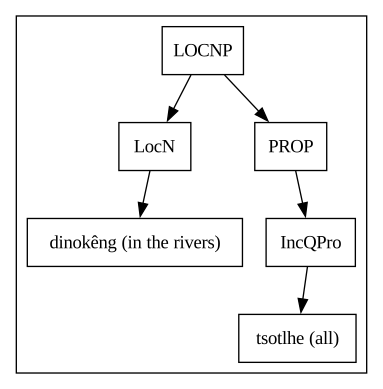
The locative noun in (6) is modified with an inclusive quantitative pronoun.
| dinokêng tsotlhe |
| di- noka- ing tsotlhe |
| NPre10-river-LocSuf IncQPro10 |
| in all the rivers |
Two phrase structure rules are applicable to the LOCNP presented in (6):
- LOCNP → LocN PROP
- PROP → IncQPro
The following tree diagram represents the constituent structure of the LOCNP in (6).
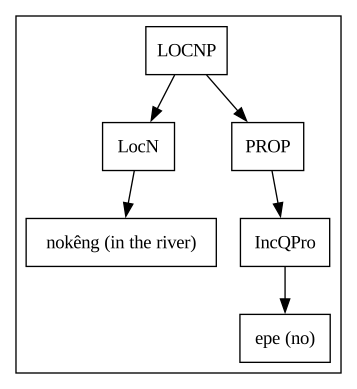
The locative noun in (7) is modified with an exclusive quantitative pronoun.
| nokêng epe |
| (ne-)-noka- ing epe |
| NPre9-river-LocSuf ExcQPro9 |
| in no river |
Two phrase structure rules are applicable to the LOCNP presented in (7):
- LOCNP → LocN PROP
- PROP → ExcQPro
The following tree diagram represents the constituent structure of the LOCNP in (7).
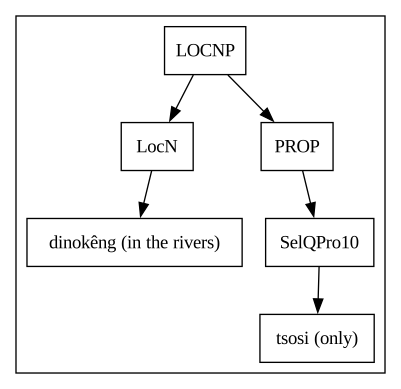
The locative noun in (8) is modified with a selective quantitative pronoun.
| dinokêng tsosi |
| di- noka- ing tsosi |
| NPre10-river-LocSuf SelQPro10 |
| only in the rivers |
Two phrase structure rules are applicable to the LOCNP presented in (8):
- LOCNP → LocN PROP
- PROP → SelQPro
The following tree diagram represents the constituent structure of the LOCNP in (8).
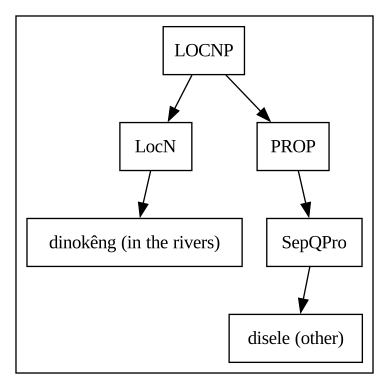
The locative noun in (9) is modified with a separative quantitative pronoun.
| dinokêng disele |
| di- noka- ing disele |
| NPre10-river-LocSuf SepQPro10 |
| in the other rivers |
Two phrase structure rules are applicable to the LOCNP presented in (9):
- LOCNP → LocN PROP
- PROP → SepQPro
The following tree diagram represents the constituent structure of the LOCNP in (9).
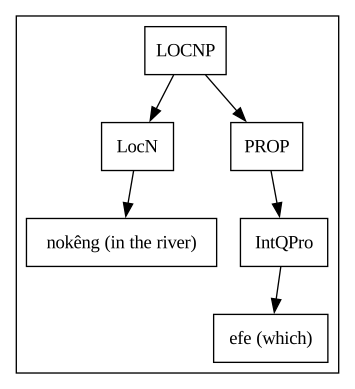
The locative noun in (10) is modified with an interrogative quantitative pronoun.
| nokêng efe? |
| (ne-)-noka- ing efe |
| NPre9-river-LocSuf IntQPro9 |
| in which river? |
Two phrase structure rules are applicable to the LOCNP presented in (10):
- LOCNP → LocN PROP
- PROP → IntQPro
The following tree diagram represents the constituent structure of the LOCNP in (10).
The above-mentioned pronouns in turn can also be modified but the exposition in this section only include pronouns without their possible modifiers. (See Pronouns and Pronoun phrases for an exposition of the syntactic structure of the PROP that consists of only heads and of heads and modifiers.)
Locative noun modified with an adverb
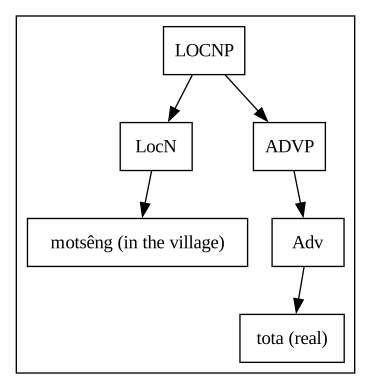
A LOCNP can be structured with a locative noun as head noun followed by an adverb phrase (ADVP). There is no agreement between the ADVP and the preceding locative noun (11).
| motsêng tota |
| mo- tse- ing tota |
| NPre3-village-LocSuf Adv |
| in the real village, at the real home |
Two phrase structure rules are applicable to the LOCNP presented in (11):
- LOCNP → LocN ADVP
- ADVP → Adv
The following tree diagram represents the constituent structure of the LOCNP in (11).
Locative noun modified with a possessive particle phrase
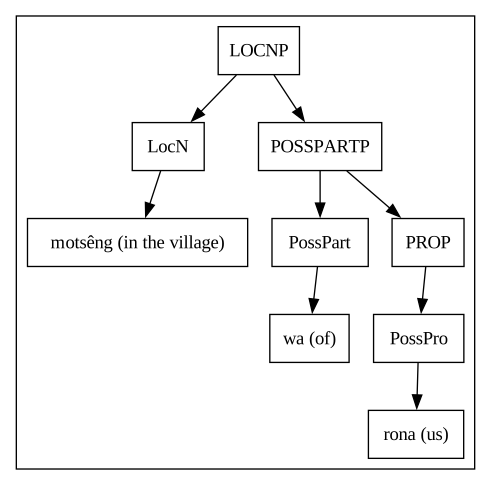
A LOCNP can be structured with a locative noun as head followed by a possessive particle phrase (POSSPARTP) as the modifier. The possessive particle that acts as the head in the POSSPARTP must show agreement with the preceding locative noun (12). (The syntactic structure of the POSSPARTP is discussed in Particles and particle phrases.)
| motsêng wa rona |
| mo- tse- ing wa rona |
| NPre3-village-LocSuf PossPart3 PossProP1pl |
| in our village, at our home |
Three phrase structure rules are applicable to the LOCNP presented in (12):
- LOCNP → LocN POSSPARTP
- POSSPARTP → PossPart PROP
- PROP → PossPro
The following tree diagram represents the constituent structure of the LOCNP in (12).
Locative noun modified with a qualificative particle phrase
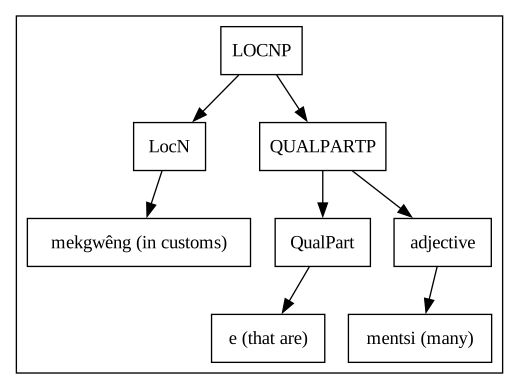
A LOCNP can be structured with a locative noun as head and a qualificative particle phrase (QUALPARTP). The qualificative particle that acts as the head in the QUALPARTP must show agreement with the preceding locative noun (13). (The syntactic structure of the QUALPARTP is discussed in detail in Particles and particle phrases.)
| mekgwêng e mentsi |
| me- kgwa- ing e me- ntsi |
| NPre4-custom-LocSuf QualPart4 NPre4-adjective |
| in many customs |
Two phrase structure rules are applicable to the LOCNP presented in (13):
- LOCNP → LocN QUALPARTP
- QUALPARTP → QualPart adjective
The following tree diagram represents the constituent structure of the LOCNP in (13).
As is the case in Setswana NPs multiple modifiers can also be included in a LOCNP. The same orderings followed in NPs can be applied in LOCNPs. The possible orderings are:
- PROP > POSSPARTP > QUALPARTP
- PROP > QUALPARTP > POSSPARTP
- QUALPARTP > PROP POSSPARTP
Refer to modification in the topic on Nouns and noun phrases for an explanation of the use of multiple modifiers in Setswana NPs.
Syntactic and semantic function of the locative noun phrase
Information about the syntactic and semantic function of the Setswana LOCNP is limited. However, it is evident in Setswana examples that the LOCNP can be used as an oblique argument of a main verb (the predicator). “The notion of argument is usually associated with verbs: verbs have argument structures, specifying the number and thematic roles of their arguments”
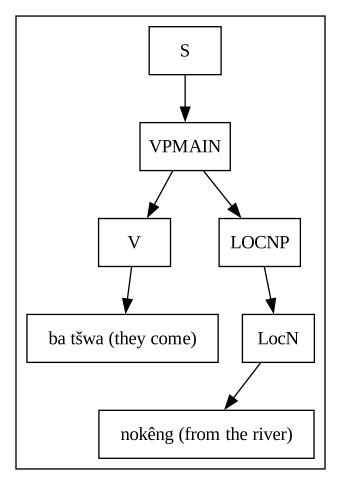
(Broekhuis & Den Dikken, 2012: 1118). Thematic roles are informal descriptions of conceptual or semantic participant roles. The thematic roles of the arguments are selected in accordance with the lexical semantics of the predicator. The thematic roles assigned to arguments are the agent, beneficiary, experiencer/goal, instrument, patient/theme and locative. The LOCNP can be assigned a locative thematic role. This role specifies the entity that indicates the place where the action or event is situated (14).
| Ba tšwa nokêng. |
| ba- tšw- a (ne-)-noka- ing |
| AgrSubj2-come-VEnd NPre9-river-LocSuf |
| They come from the river. |
The phrase structure rules applicable to the syntactic structure of the sentence in (14) is:
- S → VPMAIN
- VPMAIN → V LOCNP
- LOCNP → LocN
The following tree diagram represents the constituent structure of the sentence in (14).
To follow the grammatical functions of the LOCNP are explained.
Syntactic uses of locative noun phrases
The external syntax of the LOCNP is concerned with the use and function of this phrase in larger constructions. To follow an exposition is presented of possible functions the LOCNP may have.
Complement of locative particles mô, fa and kwa
A LOCNP usually acts as the complement of the locative particles mô, fa or kwa (kwa or its variant kô can be used as Setswana dialects are also content with the use of kô). These particles functions as the heads in a LOCPARTP. (The syntactic structure of the LOCPARTP is discussed in detail in Particles and particle phrases.)
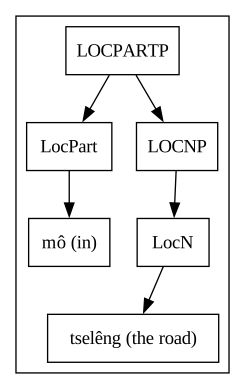
The locative particle mô (15) indicates that the “action is effected ‘in’, ‘on’ or ‘round’ or directed ‘into’ or ‘out of’, the specified locality, without reference to the distance involved”
(Cole, 1955: 341).
| mô tselêng |
| mô (ne-)-tsela-ing |
| LocPart NPre9-road- LocSuf |
| in the road |
The phrase structure rules applicable to the syntactic structure of the LOCPARTP in (15) is:
- LOCPARTP → LocPart LOCNP
- LOCNP → LocN
The following tree diagram represents the constituent structure of the LOCPARTP in (15).
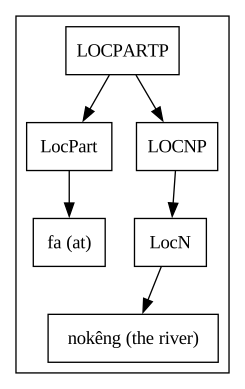
The locative particle fa (16) implies a relative proximity. It indicates that “the specified locality of ‘at’, ‘to’ or ‘from which’ the action is effected or directed, is relatively near”
(Cole, 1955: 341).
| fa nokêng |
| fa (ne-)-noka- ing |
| LocPart NPre9-river-LocSuf |
| at the river, by the river (nearby the river) |
The phrase structure rules applicable to the syntactic structure of the LOCPARTP in (16) is:
- LOCPARTP → LocPart LOCNP
- LOCNP → LocN
The following tree diagram represents the constituent structure of the LOCPARTP in (16).
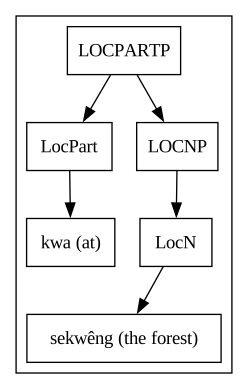
The locative particle kwa (17) implies relative remoteness. It indicates that “the specified locality ‘at’, ‘to’ or ‘from’ which the action is effected or directed, is relatively distant”
(Cole, 1955: 341).
| kwa sekgwêng |
| kwa se- kwa- ing |
| LocPart NPre7-forest-LocSuf |
| at the forest (distant) |
The phrase structure rules applicable to the syntactic structure of the LOCPARTP in (17) is:
- LOCPARTP → LocPart LOCNP
- LOCNP → LocN
The following tree diagram represents the constituent structure of the LOCPARTP in (17).
Oblique
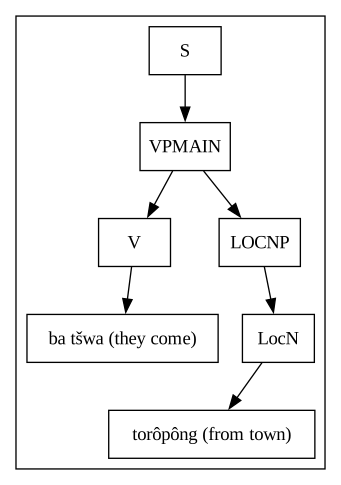
A LOCNP can function as an oblique in a sentence. This argument function is an obligatory constituent and it is semantically implicit (Falk, 2001: 206). In (18) the LOCNP torôpông ‘from town’ is an obligatory constituent as it acts as an oblique argument function of the verb ba tšwa ‘they come’.
| Ba tšwa torôpông |
| ba- tšw- a (ne-)-torôpô-ing |
| AgrSubj2-come-VEnd NPre9-town- LocSuf |
| They come from town. |
The phrase structure rules applicable to the syntactic structure of the sentence in (18) is:
- S → VPMAIN
- VPMAIN → V LOCNP
- LOCNP → LocN
The following tree diagram represents the constituent structure of the sentence in (18).
Adjunct
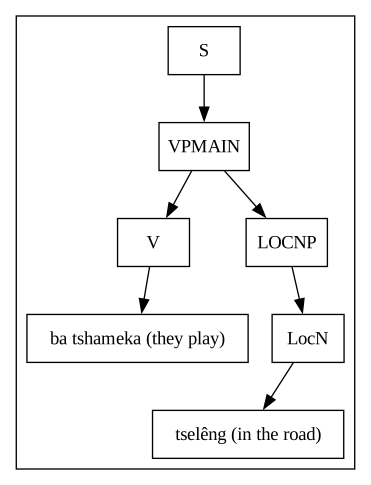
A LOCNP can function as the adjunct (descriptive) in a sentence (19). An adjunct is a phrase which is used to provide additional, though not essential, information (Louwrens, 1994: 4). The LOCNP is used as an optional constituent as it modifies the VP regarding the locality where the action is executed. In (19) the LOCNP torôpông ‘from town’ is an optional constituent that describes the verb ba tšwa ‘they come’.
| Ba tshameka tselêng. |
| ba- tshamek-a (ne-)-tsela-ing |
| AgrSubj2-play- VEnd NPre9-road- LocSuf |
| They play in the road. |
The phrase structure rules applicable to the syntactic structure of the sentence in (19) is:
- S → VPMAIN
- VPMAIN → V LOCNP
- LOCNP → LocN
The following tree diagram represents the constituent structure of the sentence in (19).
Locative class nouns and locative class noun phrases
The internal syntax of a locative class noun phrase (LOCCLNP) includes an exposition of the constituents this phrase can be constructed with. The use of this phrase in larger construction is the focus of its external syntax.
In this topic a characterisation of the locative class, the phrase-internal structure of the LOCCLNP, its syntactic uses and semantic functions, modification and the syntactic functions of the LOCCLNP are presented. The description of the phrase-internal structure of the LOCCLNP concentrates on the structuring of this phrase with words as well as with word groups and the agreement phenomena that govern the syntactic structure.
Characterisation
Nouns can be divided in 20 noun classes:
| Noun class | Class prefix |
|---|---|
| 1 | mo- |
| 2 | ba- |
| 1a | (-)- |
| 2a | bo- |
| 3 | mo- |
| 4 | me- |
| 5 | le- |
| 6 | ma- |
| 7 | se- |
| 8 | di- |
| 9 | (ne)- |
| 10 | di- |
| 11 | lo- |
| 14 | bo- |
| 6 | ma- |
| 15 | go- |
| 16 | fa- |
| 17 | go- |
| 18 | mo- |
| 19 | ga- |
| 20 | (-)- |
The nouns in noun classes 1 to 14 are ordinary (basic or common) nouns and the nouns in noun class 15 are infinitive nouns. The nouns in noun classes 16 to 20 have a locative significance and are referred to as the locative class nouns and are not marked for singularity or plurality (Krüger, 2006: 92-98). However, noun classes 19 and 20 are referred to as either classes X and Y or the ga- and N-locative classes (Krüger, 2006: 92-98; Poulos & Louwrens, 1994: 47).
The morphological structure of locative class nouns consists of a class prefix and a root ((20) to (24)).
| fatshe |
| fa- tshe |
| NPre16-down |
| down, on the ground, below |
| godimo |
| go- dimo |
| NPre17-above |
| above, top |
| morago |
| mo- rago |
| NPre18-behind |
| behind, back |
| gare |
| ga- re |
| NPre19-between |
| between, middle |
| têng |
| (-)- têng |
| NPre20-inside |
| inside |
A locative class noun functions as the head in the syntactic structure of a locative class noun phrase. This head can also be modified with other phrases.
The internal structure of the locative class noun phrase
A LOCCLNP can be constructed with a word or a word group. In this instance the word is a locative class noun and the word group is a locative class noun group.
The locative class noun phrase constructed with only a locative class noun
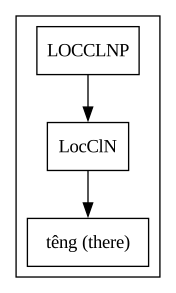
The LOCCLNP can consist of only a head as it does not need an obligatory complement or a possible modifier to form a grammatical structure. The head is a locative class noun belonging to noun classes 16 to 20. A locative class noun can be used to construct the minimal structure of a LOCCLNP as this phrase can only consist of a head. In (25) the head in the LOCCLNP consists of the locative class noun têng ‘there’. This phrase constitutes a minimal phrase structure.
| Ke tla ya têng. |
| ke- tla- y- a (-)- têng |
| AgrSubjP1sg-FutPre-go-VEnd NPre20-there |
| I shall go there. |
The phrase structure rule for the LOCCLNP têng ‘there’ in (25) is:
- LOCCLNP → LocClN
The following tree diagram represents the constituent structure of the LOCCLNP in (25).
The locative class noun phrase constructed with a locative class noun group
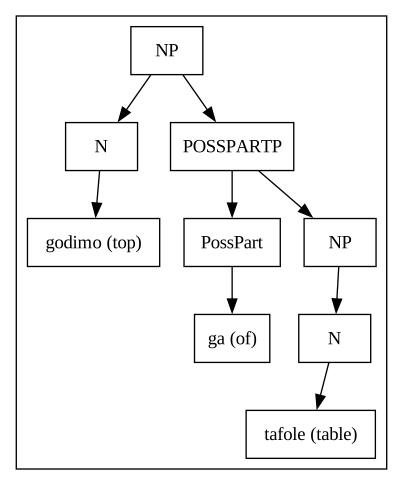
The LOCCLNP can be constructed with a locative class noun group. The locative class noun group consists of a head (the locative class noun) noun followed by possessive particle phrase (POSSPARTP). (Further reading: Berg, 2018: 108). (The syntactic structure of the POSSPARTP is discussed in Particles and particle phrases.) The POSSPARTP in this syntactic structure always includes the possessive particle ga ‘of’ belonging to noun classes 16 to 20. This possessive particle thus agrees with the noun class of the preceding locative class noun. In (26) the LOCCLNP consists of the locative class noun godimo ‘above’ belonging to noun class 17 and it is modified with the POSSPARTP ga tafole ‘of table’.
| godimo ga tafole |
| go- dimo ga (ne-)-tafole |
| NPre17-top PossPart17 NPre9-table |
| (on) top of table |
Three phrase structure rules are applicable to the CLNP presented in (26):
- LOCCLNP → LocClN POSSPARTP
- POSSPARTP → PossPart NP
- NP → N
The following tree diagram represents the constituent structure of the NP in (26).
Syntactic and semantic functions of the locative class noun phrase
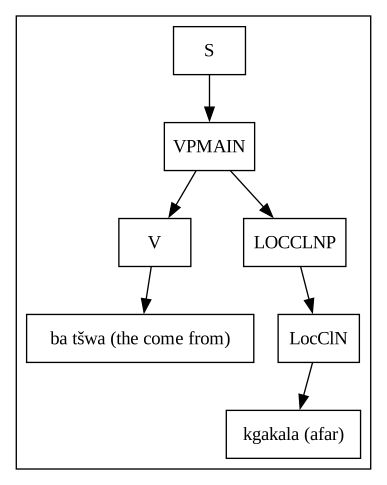
As is the case with the LOCNP information about the syntactic and semantic function of the Setswana LOCCLNP is also limited. Setswana examples were consulted and it is evident that the LOCCLNP can in some instances be used as an oblique argument. The LOCCLNP has a locative thematic role as it indicates the place where the action or event is situated. The meaning of the verb sometimes necessitates the inclusion of an oblique. The oblique in (27) is a LOCCLNP.
| Ba tswa kgakala. |
| ba- tsw- a (-)- kgakala |
| AgrSubj2-come-VEnd NPre20-afar |
| They come from afar. |
The phrase structure rules applicable to the syntactic structure of the sentence in (27) is:
- S → VPMAIN
- VPMAIN → V LOCCLNP
- LOCCLNP → LocClN
The following tree diagram represents the constituent structure of the sentence in (27).
To follow the grammatical functions of the LOCNP are explained.
Syntactic uses of locative noun phrases
The external syntax of the LOCNP is concerned with the use and function of this phrase in larger constructions. It can act as a complement of specific particles, as a complement of the describing copulative verb, or as an oblique or adjunct in a sentence
Complement of locative particles mô, fa and kwa
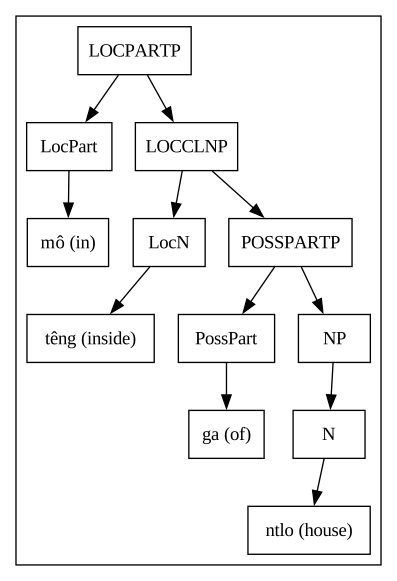
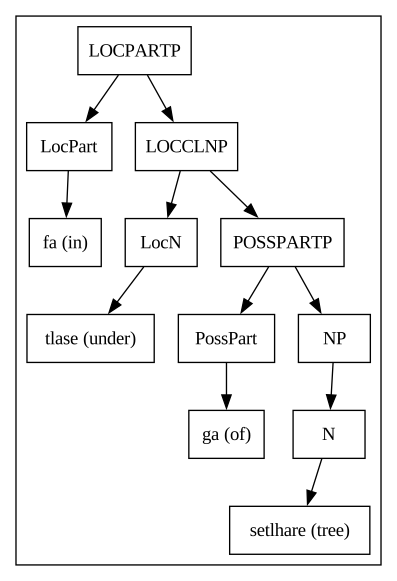
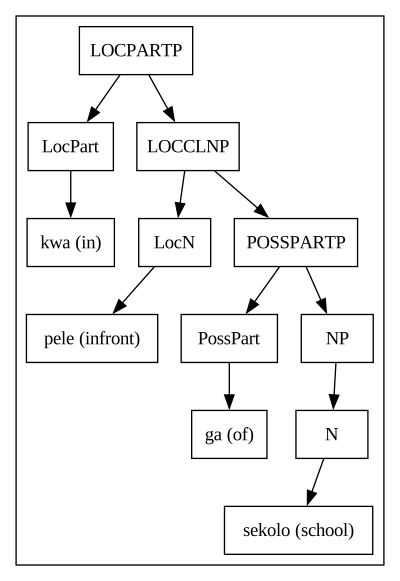
A LOCCLNP usually acts as the complement of the locative particles mô, (28) fa (29) or kwa (30). These particles are the heads in a LOCPARTP. (The syntactic structure of the LOCPARTP is discussed in detail in Particles and particle phrases.)
| mô têng ga ntlo |
| mô (-)-têng ga (ne-)-ntlo |
| LocPart NPre20-inside PossPart20 NPre9-house |
| inside the house |
The phrase structure rules applicable to the syntactic structure of the LOCPARTP in (28) is:
- LOCPARTP → LocPart LOCCLNP
- LOCNP → LocClN POSSPARTP
- POSSPARTP → PossPart NP
- NP → N
The following tree diagram represents the constituent structure of the LOCPARTP in (28).
| fa tlase ga selthare |
| fa (-)- tlase ga se- tlhare |
| LocPart NPre20-under PossPart19 NPre7-tree |
| under the tree |
The phrase structure rules applicable to the syntactic structure of the LOCPARTP in (29) is:
- LOCPARTP → LocPart LOCCLNP
- LOCNP → LocClN POSSPARTP
- POSSPARTP → PossPart NP
- NP → N
The following tree diagram represents the constituent structure of the LOCPARTP in (29).
| kwa pele ga sekolo |
| kwa (ne-)- pele ga se- kolo |
| LocPart NPre20-infront PossPart20 NPre7-school |
| infront of the school |
The phrase structure rules applicable to the syntactic structure of the LOCPARTP in (30) is:
- LOCPARTP → LocPart LOCCLNP
- LOCNP → LocClN POSSPARTP
- POSSPARTP → PossPart NP
- NP → N
The following tree diagram represents the constituent structure of the LOCPARTP in (30).
Complement of describing copulative verb
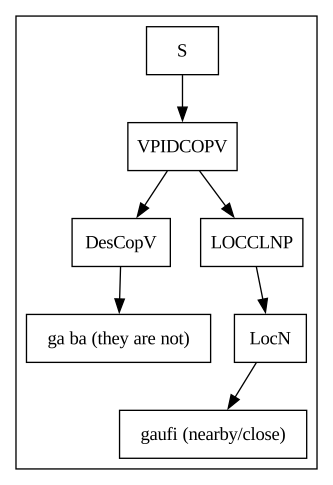
A LOCCLNP can act as the complement of a describing copulative verb (32) (Krüger, 2013b: 144). (The syntactic structure of the VPDESCOPV is discussed in detail in Verb and verb phrases.)
| Ga ba gaufi. |
| ga- ba ga- ufi |
| NegPre-DesCopV NPre19-near |
| They are not nearby/close. |
The phrase structure rules applicable to the syntactic structure of the sentence in (32) is:
- S → VPDESCOPV
- VPIDCOPV → DesCopV LOCCLNP
- LOCCLNP → LocClN
The following tree diagram represents the constituent structure of the sentence in (32).
Oblique
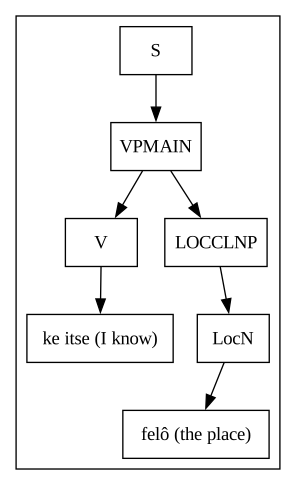
A LOCCLNP can function as an oblique in a sentence (Krüger, 2013b: 79). The oblique is a compulsory phrase because the meaning of the verb necessitates the inclusion of such a phrase. In (33) the LOCCLNP felô fa ‘this place’ is an obligatory constituent as it acts as an oblique argument function of the verb ke itse ‘I know’.
| Ke itse felô fa. |
| ke- its- e (-)- felô fa |
| AgrSubjP1sg-know-VEnd NPre20-place DemPro20D1 |
| I know the place here. |
The phrase structure rules applicable to the syntactic structure of the sentence in (33) is:
- S → VPMAIN
- VPMAIN → V LOCCLNP
- LOCNP → LocClN PROP
- PROP → DemPro
The following tree diagram represents the constituent structure of the sentence in (33).
Adjunct
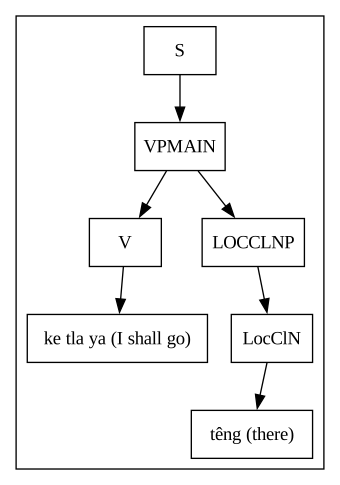
A LOCCLNP can function as the adjunct (descriptive) in a sentence (Krüger, 2013b: 85-86). In (34) the LOCCLNP têng ‘there’ is an optional constituent that describes the verb ke tla ya ‘I shall go’.
| Ke tla ya têng. |
| ke- tla- y- a (-)- têng |
| AgrSubjP1sg-FutPre-go-VEnd NPre20-there |
| I shall go there. |
The phrase structure rules applicable to the syntactic structure of the sentence in (34) is:
- S → VPMAIN
- VPMAIN → V LOCCLNP
- LOCCLNP → LocClN
The following tree diagram represents the constituent structure of the sentence in (34).
References
Berg, A. (2018) Computational syntactic analysis of Setswana. Doctoral Thesis. North-West University, Potchefstroom.
Broekhuis, H. & Den Dikken, M. (2012) Syntax of nouns and noun phrase. Vol 2. Amsterdam: Amsterdam University Press.
Cole, D. T. (1955) An introduction to Tswana grammar. Cape Town: Longman.
Falk, Y. N. (2001) Lexical-Functional grammar: an introduction to parallel constraint-based syntax. Stanford: CSLI.
Krüger, C. J. H. (2006) Introduction to the morphology of Setswana. München: Lincom.
Krüger, C. J. H. (2013a) Setswana syntax: a survey of word group structures. Vol 1. München: Lincom.
Krüger, C. J. H. (2013b) Setswana syntax: a survey of word group structures. Vol 2. München: Lincom.
Louwrens, L. J. (1994) Dictionary of Northern Sotho Grammatical terms. Pretoria: Via Afrika.
Poulos, G. & Louwrens, L. J. (1994) A linguistic analysis of Northern Sotho. Pretoria: Via Afrika.