Vowel segment inventory
This section provides an overview of the vowels of isiXhosa.
Vowel segment inventory
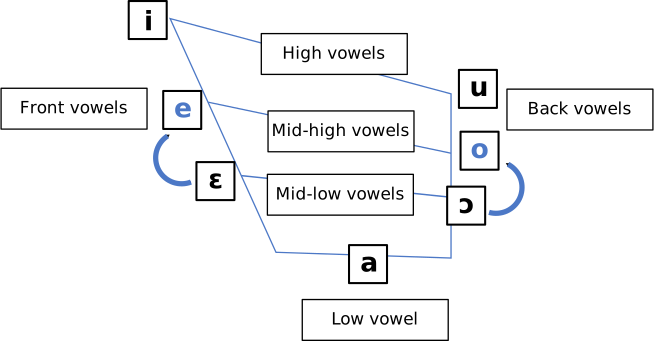
The IsiXhosa vowel segment inventory comprises seven vowels two of which (in blue) are morpho-phonologically derived.
| Description | Orthographic | IPA | Examples | Translation |
|---|---|---|---|---|
| Low central vowel | a | a |
 |
|
| Mid-low front vowel | e | ɛ |
|
|
| Mid-high front vowel | e | e |
|
|
| High front vowel | i | i |
|
|
| Mid-low back vowel | o | ɔ |
|
|
| Mid-high back vowel | o | o |
|
|
| High back vowel | u | u |
|
|
Other phonetic traits of isiXhosa vowels
Vowel raising / Vowel harmony
As indicated in the vowel chart (Table 1), a mid-low back or front vowel is raised to a corresponding mid-high vowel if a high vowel appears in the next syllable:
- /ɔ/ > [o] : -oma [ɔːma] ‘become dry’ > -omisa [omisa] ‘become dry’
- /ɛ/ > [e]: -thenga [thɛːŋɡa] ‘buy’ > thengisa [theŋɡiːsa] ‘sell’
Killian (2017) regards this process as vowel harmony claiming that “The process of mid-vowel assimilation for the feature [+ATR] is consistent in all instances in which the mid-vowel occurs preceding a high vowel trigger, unless harmony is blocked by the low opaque vowel [a].”
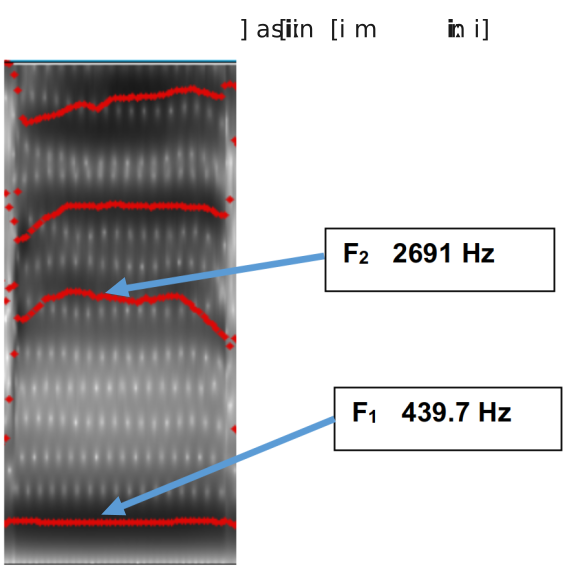
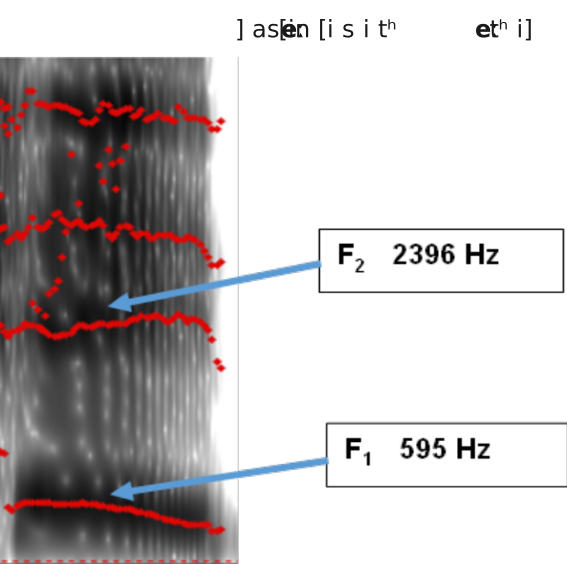
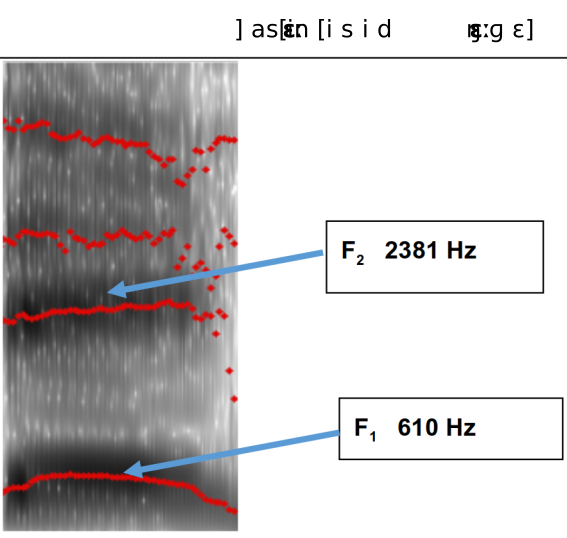
The feature (ATR) refers to advanced tongue root which, in this case, is supported by an acoustic analysis of the mid-vowels and the low vowel [a].
Vowel length
Acoustic features of vowel examples in Table 1
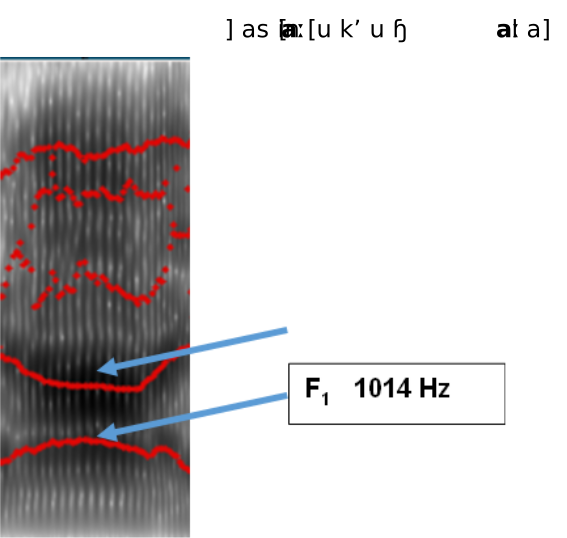
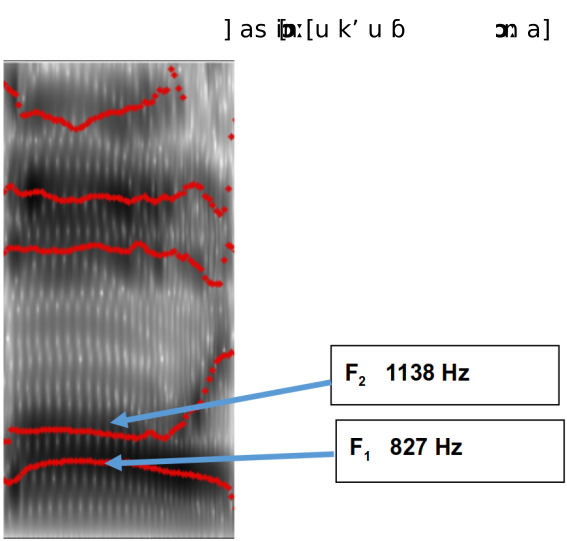
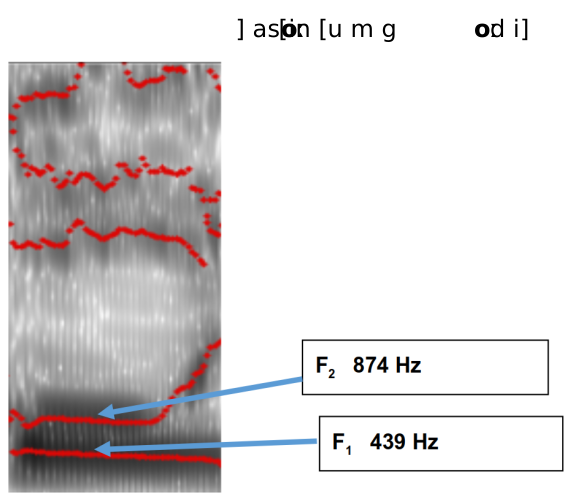
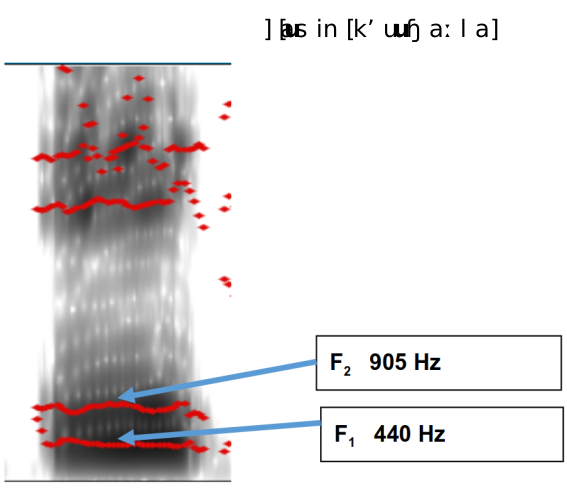
In certain contexts, the vowel in the penultimate syllable of a word, phrase or sentence may be lengthened:
- Umfana [umfaːna] ‘boy’
- Umfana uyadlala. [umfana ujaɧaːla] ‘the boy is playing’
- Umfana udlala ngebhola. [umfana uɧala ŋɡebɔːla] ‘the boy is playing with the ball’
Vowel devoicing
Vowels occurring as final elements in certain contexts, such as word final, phrase final or sentence final position, the final vowel may be devoiced especially if it is preceded by a long vowel in the penultimate syllable.
- Umfana [umfaːna] ‘boy’
- Umfana udlala ngebhola. [umfana uɧala nɡeɓɔːla] ‘the boy is playing with the ball’
Vowel deletion
In fast running speech the first of two vowels in succession is often dropped (deleted):
- Inkosi yam [iŋk’osi jaːm] ‘my chief’ > inkos yam [iŋk’os jaːm]
See section on phonological processes for more examples.
References
Kilian, K. (2017) Vowel harmony in isiXhosa: an OT and acoustic study of [ATR]. Masters Dissertation. Rhodes University, Makhanda (Grahamstown).